

 0333 444 0070
7 minute read

5 Ways To Help Prevent A Fire Spreading




in occupied student accommodation.
Valentine Court is a purpose-built student accommodation scheme on Valentine Way, off Tritton Road in Lincoln. It was a privately funded, developer-led project and is operated directly by the University of Lincoln.
After students had moved in, Fire Industry Specialists were brought in to remove non-compliant foam from around the door frames and install additional fire stopping. We used a tested Nullifire system, which restored the fire separation around each doorset and gave the building a robust, tested detail.
The work was carried out while the accommodation was occupied, during COVID-19 restrictions. We kept to a zero-defects standard and left every area clean and safe for students.
Valentine Court provides modern student accommodation for the University of Lincoln, a short distance from the city centre. The scheme is made up of several accommodation blocks and every flat entrance door and many internal doors are fire doors, and they protect the escape routes students rely on.
In student accommodation, fire doors and the fire stopping around them are an important part of the fire strategy. Each flat and corridor is designed as a separate compartment. That only works if the doorsets, and the gaps between the frames and the walls, hold back fire and smoke for their rated period.
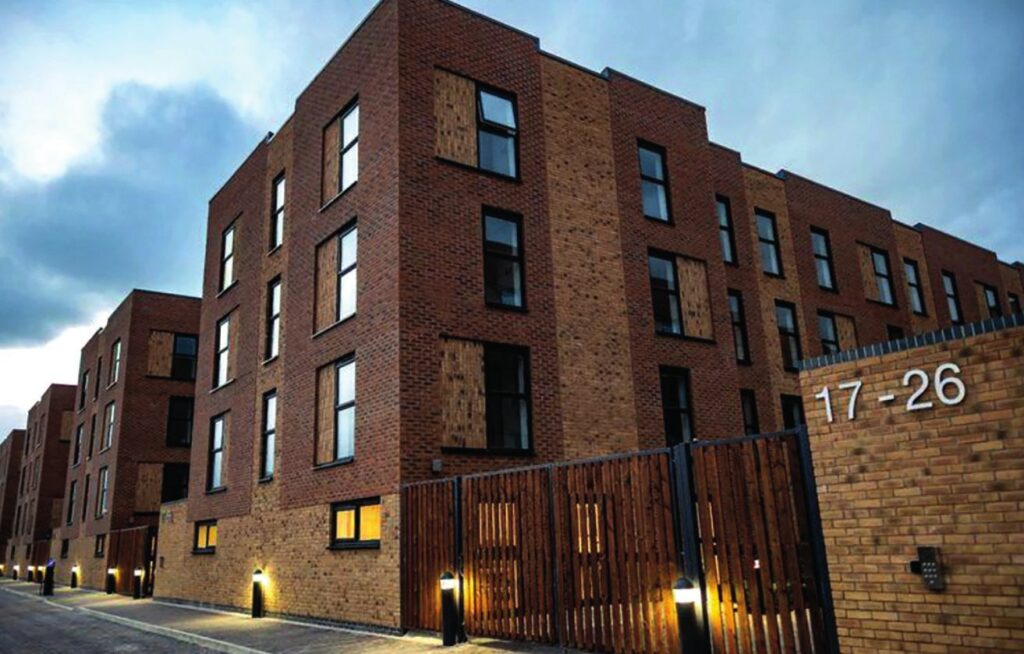
After the building was completed and students had moved in, it was found that the gaps between many door frames and the surrounding walls had been filled with foam that was not part of a tested fire stopping solution.
It’s a common problem on new-build projects. A fire door is only tested and certified as a complete doorset, and that includes how the frame is fixed and sealed into the wall. General-purpose expanding foam, or a fire-rated foam used outside its tested application, can:
For more on this, read our guide to the most common fire stopping mistakes and areas of non-compliance.
Because students were already living in the building, the work had to be planned around their routines, with no loss of security and every door back in use the same day.
We worked with the university’s accommodation team to plan the programme block by block and flat by flat. Working methods were adapted to the COVID-19 restrictions in place at the time, to protect students, staff and our operatives.
At each doorset we carefully cut back and removed the existing foam from the frame-to-wall gap. We took care not to damage the frames, the architraves or the surrounding finishes.
We then installed new fire stopping using Nullifire products, following a tested detail for the gap sizes and wall types on site. This gave every frame a robust, tested seal.
Every doorset was checked against a zero-defects standard before we signed it off. This gives the operator evidence for their fire risk assessment and future fire door inspections.
Our team worked in students’ homes during term time, so we worked to these standards:
Every door frame at Valentine Court is now sealed with a tested Nullifire fire stopping detail, and the non-compliant foam is gone. The doorsets and compartment walls can once again work together to contain fire and smoke and protect escape routes. The work was completed with students in residence and with no defects at handover.
We work with universities, accommodation operators and developers across Lincoln, Nottingham, Sheffield and the wider UK, putting right fire stopping and fire door defects in occupied buildings.
Whether the issue is found after completion or during a routine fire door inspection, we’ll plan the work around your residents.
Call us on 0333 444 0070 or request a callback.
Fire safety is a responsibility that never rests and we’re here to implement complete fire protection for your business. Get in touch with our industry-leading experts to learn how we prevent fires, protect lives, and ensure compliance for you.





Fire Industry Specialists offer expert fire safety solutions to protect homes and businesses and ensure complete compliance with UK fire safety standards and regulations.