
 0333 444 0070
7 minute read

5 Ways To Help Prevent A Fire Spreading




Structural steel fire protection is an essential part of passive fire protection, helping steel columns, beams and loadbearing frames maintain their strength during a fire. Although steel is non-combustible, it can lose loadbearing capacity when exposed to high temperatures. Without suitable protection, this can affect the stability of the structure and increase the risk of building failure.
At Fire Industry Specialists Ltd, we provide fire protection for structural steel in commercial and industrial buildings across the UK. Our team can support new builds, refurbishments, remedial works and wider passive fire protection projects, helping contractors, developers, building owners and facilities managers protect steel structures and meet fire safety requirements.
Whether your project requires intumescent coatings, cementitious or fibrous spray systems, or fire encasement boarding, we can help specify and install the right solution for your building.
Structural steel fire protection refers to the materials and systems used to protect steelwork from heat during a fire. These systems are designed to insulate steel and slow down the rate at which it reaches critical temperatures.
In practical terms, fire protection of steel structures helps loadbearing steel elements retain their strength for a defined period. This may be 30, 60, 90 or 120 minutes, depending on the building’s use, fire strategy and required level of fire resistance.
Typical steel elements requiring protection can include:
The correct fire protection for steel structures will depend on where the steel is located, whether it is visible or concealed, the required fire rating, and the environmental conditions within the building.
For a broader overview of the principles involved, our guide to structural steel fire protection explores why steelwork requires protection, the systems available and the factors that influence specification.
Steel is widely used in construction because it is strong, versatile and durable. However, during a fire, unprotected steel can heat up quickly. As its temperature rises, it begins to lose strength and stiffness, which can reduce its ability to support the building.
This makes steel structure fire protection critical for three main reasons.
Intumescent coatings are one of the most common forms of fire protection for structural steel, particularly where the steelwork is visible. The coating is applied to the steel like paint and then finished with a decorative topcoat where required.
During a fire, the intumescent coating reacts to heat and expands to form an insulating char. This layer slows heat transfer and helps the steel maintain its load bearing capacity for the required period.
Intumescent coatings are often used in:
For a more detailed explanation of how these coatings work, their different applications and what should be considered when specifying them, read our guide to fire protection paint.
Cementitious and fibrous spray systems are commonly used where steelwork is concealed or where a functional finish is acceptable. These systems are applied directly to the steel to create an insulating layer that protects it from high temperatures.
Spray-applied systems are often suitable for large-scale commercial and industrial projects because they can cover significant areas efficiently. They may be used in:
Fire encasement boarding involves surrounding steel elements with fire-resistant boards. This method is often chosen where a robust, defined and durable protective system is required.
Board systems are commonly used for hidden steelwork, service areas, plant rooms, corridors, car parks and areas where impact resistance may be important. They can provide consistent protection when correctly fixed and detailed around joints, corners and connections. Fire encasement boarding can be a strong option where:
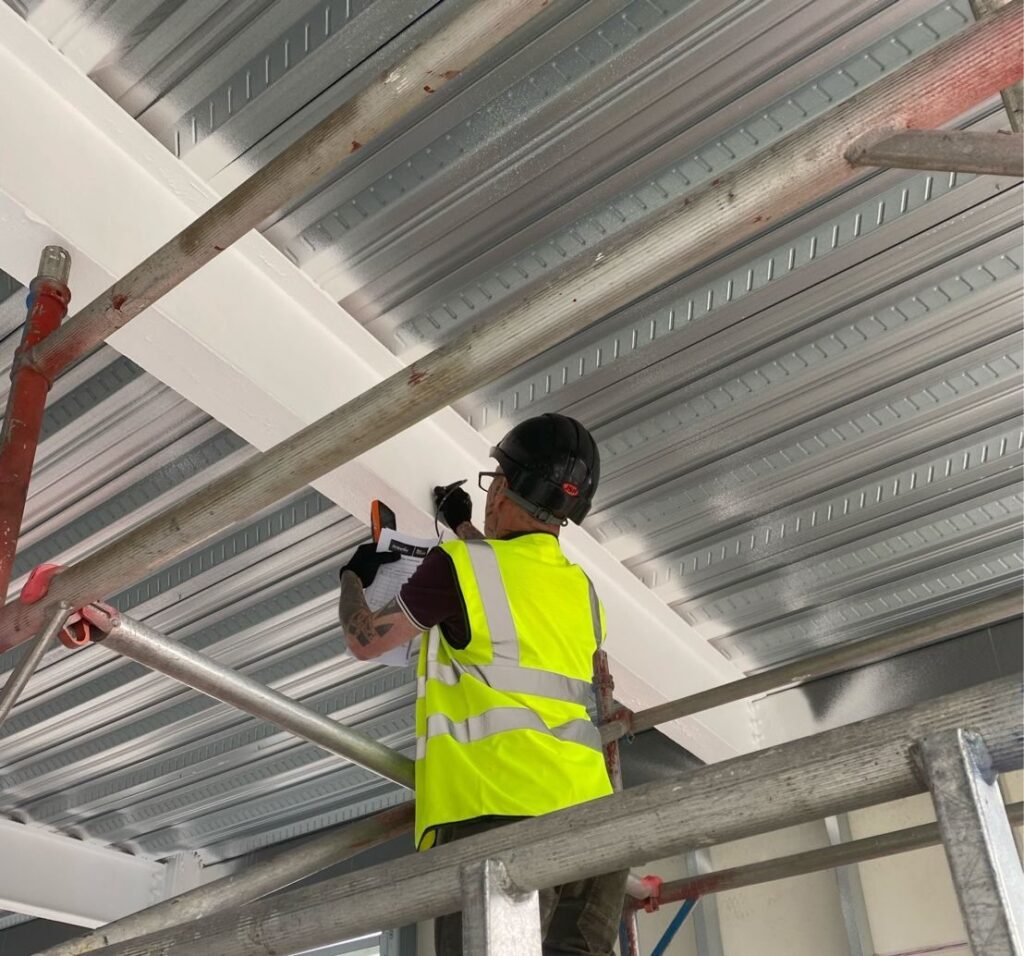
We begin by reviewing the building requirements, fire strategy, steel layout and required fire resistance rating. Where drawings or project specifications are available, we use these to understand which steel elements require protection and what level of performance is needed.
This stage helps determine whether intumescent coatings, spray-applied systems, encasement boards or a combination of systems is the most suitable option.
Correct surface preparation is essential, particularly for intumescent coatings and spray-applied systems. Steel may need to be cleaned, primed or prepared to ensure the protective system bonds correctly and performs as intended.
Poor preparation can affect adhesion, finish and long-term durability, so this stage is key to a compliant installation.
Once the system has been specified and the steel prepared, our team carries out the installation or application in line with manufacturer guidance and relevant test evidence.
This may involve applying intumescent coatings to the required thickness, spraying cementitious or fibrous materials, or fitting fire-resistant boards around steel sections. Attention to detail is essential, particularly around connections, joints, corners and areas where the steel meets other building elements.
After installation, the work should be inspected and recorded. This may include visual checks, thickness measurements where applicable, photographic evidence and documentation to support the building’s fire safety records.
Clear documentation helps building owners, contractors and facilities managers demonstrate that fire protection structural steel works have been completed in line with the required specification.
Choosing the right fire protection for steel structure applications depends on several practical and compliance-led factors. No single system is best for every building, so specification should always be based on the fire strategy, site conditions and long-term use of the space. Key considerations include:
For visible steelwork, intumescent coatings may be preferred because they provide a more attractive finish. For hidden or high-impact areas, board systems may be more suitable. For large industrial or back-of-house spaces, spray-applied systems may offer a practical and efficient solution.
At FIS, we can help assess your building and recommend a suitable structural steel fire protection system based on performance, compliance and project needs.
Structural steel fire protection must be selected and installed in line with the building’s fire strategy, relevant regulations and product test evidence.
In England, Approved Document B provides guidance on fire safety in building design, including fire resistance for structural elements. Depending on the system and project, standards such as BS 476, BS EN 13381 and BS EN 13501 may also be relevant.
It is important that any fire protection for structural steel in buildings is supported by system-specific evidence. This means the product or system should have been tested for the intended application, steel section, protection thickness and required fire resistance period.
Competent specification and installation are essential. If the wrong system is chosen, applied incorrectly or installed without the correct thickness or detailing, the steel may not achieve the required level of protection.
Structural steel protection is one part of a wider network of passive fire protection systems used in modern buildings, with different measures working together to support structural integrity, compartmentation and the building’s overall fire strategy, and our team understands how steel protection works alongside fire stopping, fire barriers, compartmentation and fire doors to support the overall fire strategy of a building.
We can support your project from initial assessment through to installation and remedial works. Our team can help identify which steel elements require protection, recommend suitable systems, install them correctly and provide practical guidance to support compliance.
As part of the LS Fire Group, we provide UK-wide coverage while maintaining a responsive and specialist service. We work with commercial and industrial clients across a wide range of sectors, including construction, manufacturing, warehousing, education, healthcare, residential and public sector buildings.
Structural steel fire protection plays a vital role in protecting buildings, supporting safe evacuation and helping steel structures maintain their strength during a fire.
Whether your project requires intumescent coatings, spray-applied protection, fire encasement boarding or remedial works to an existing system, FIS can help.
Contact Fire Industry Specialists Ltd today to discuss your structural steel fire protection requirements, arrange a site assessment or speak to our team about the most suitable solution for your building.
Fire safety is a responsibility that never rests and we’re here to implement complete fire protection for your business. Get in touch with our industry-leading experts to learn how we prevent fires, protect lives, and ensure compliance for you.




Fire Industry Specialists offer expert fire safety solutions to protect homes and businesses and ensure complete compliance with UK fire safety standards and regulations.