


Key Takeaways
- Compartmentation divides buildings into fire-resistant compartments to contain fire and smoke, ensuring safe evacuation.
- It’s vital for protecting lives, infrastructure, and assets by preventing the spread of flames and smoke.
- Regulations, like Approved Document B, dictate fire resistance periods, building heights, and requirements for walls, beams, and openings.
- Fire Industry Specialists (FIS) offer services to achieve and maintain compartmentation, including fire stopping, fire doors, and fire barriers.
Fire safety isn’t limited to just extinguishers and alarms. Sometimes it’s the less obvious aspects of a building itself, such as the structure and layout, that can play a key part in keeping people safe should the worst happen. The construction of any building can be used as an effective element in a passive fire protection strategy. This is known as compartmentation, or fire compartmentation.
Compartmentation plays a vital role in containing fire outbreaks, preventing them from spreading rapidly throughout a building. In this blog post, we’ll guide you through exactly what compartmentation in fire safety and construction is, along with how it works, and the regulations surrounding the practice.
What is compartmentation?
In the simplest of terms, fire compartmentation is a term used to describe the practice of dividing a building into separate compartments to prevent the spread of fire. Each compartment is designed to contain a fire for a specified period, allowing occupants to evacuate safely and give firefighters time to respond effectively.
The compartments are fitted with fire-resistant materials, including the use of cavity barriers and fire doors, so that the space can be isolated in the event of a fire. Fire compartmentation can be applied to both residential and non-residential properties alike.
It’s a widely used strategy that is crucial in enhancing the safety of buildings and reducing the risk of fire-related injuries and damage. Implementing compartmentation measures such as fire-resistant walls, doors, and floors, enables building owners to protect lives and property in the event of a fire.
What are the different types of fire compartmentation measures?
There are several different types of fire compartmentation measures that can be implemented to help contain fires and prevent them from spreading rapidly throughout a structure. Some of the most common types of measures include:
- Fire-resistant walls and ceilings – commonly implemented in the construction phase of a building, cavity barriers and service penetrations are designed to withstand high temperatures and prevent the passage of flames and smoke within wall cavities and ceiling penetrations.
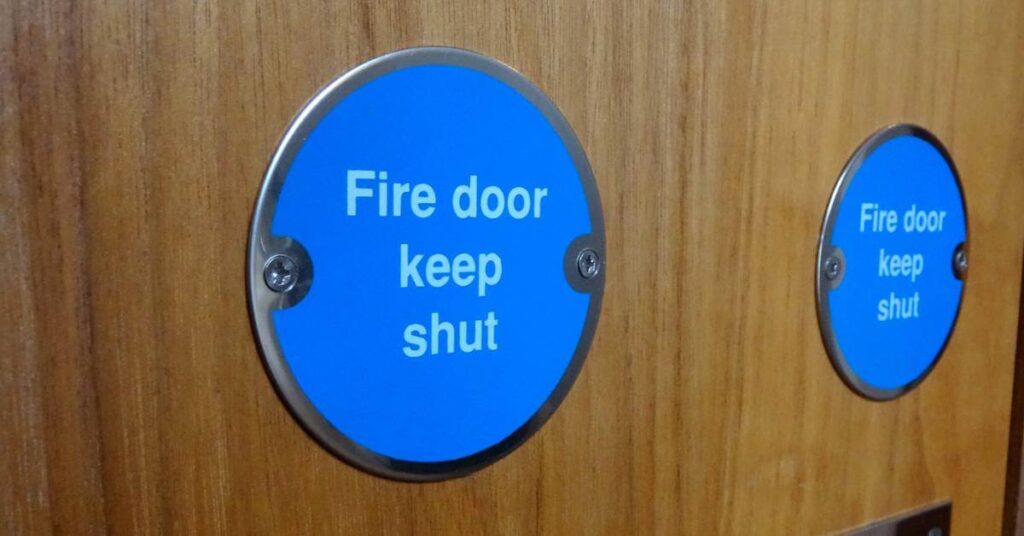
- Fire doors – equipped with intumescent strips that expand under heat exposure, these essential components create a seal to prevent rapid fire spread.
- Fire dampers – these are installed in ventilation systems to help block the spread of fire and smoke through ductwork.
These are just some of the many measures used for compartmentation in fire safety. Understanding where these measures are found and implemented in your building allows you to carry out proper and regular maintenance to ensure they’re working optimally.
How does fire compartmentation help to save lives?
As we’ve mentioned, the primary aim of fire compartmentation within a building is to try and isolate a fire in one specific part of a building. In preventing the spread of flames and smoke throughout all areas of a building’s structure, it allows for extra time for anyone inside to safely exit without harm. Without these measures in place, fire and smoke would be able to quickly travel throughout a building, not only putting people in immediate danger but also cutting them off from evacuation routes.
Containing a fire in one place also means there is a greater window of time for firefighters to arrive and tackle the flames before they spread and decimate a structure. This can be a crucial device if there are hazardous substances or materials within a building that could make the situation worse.
Likewise, if you have valuable infrastructure and assets, such as a server room, that you need to keep away from a fire, compartmentation is a great way of achieving this as you can protect the space for longer.
What are the UK fire compartmentation regulations?
In the UK, fire compartmentation regulations, specifically in building design, are outlined in the Approved Document B. Applying to both residential and non-residential buildings, there are a variety of details in these regulations that pertain to fire safety in and around buildings. However, here are some of the key points that need to be considered for compartmentation:
- Minimum periods of fire resistance – this can apply to a variety of elements within the structure, including walls and floors, with the presence (or lack) of a sprinkler system having an impact on the minimum resistance levels required.
- Building heights – if your building is over 30m in height, then there needs to be a compliant compartmentation floor in between every storey of the building.
- Common walls – if a wall is common to two or more other buildings, then it should be built as a compartmentation wall.
- Permitted openings – where adjoined buildings share a compartment wall, it should only be disrupted by fire doors or pipework that has been fire stopped by a professional company, like FIS.
- Beams and joists – where any compartment is connected via a beam or joist, this also needs to be fire stopped to ensure flames and smoke cannot spread through openings.
- Cavity barriers and fire-resistant ceilings – where either of these components are installed in a building, they should be able to withstand fire for 30 minutes at a minimum.
Adhering to these fire compartmentation regulations means not only are you taking fire safety within your building seriously, but you’re also prioritising the safety and well-being of occupants.
Speak to us about fire compartmentation in your building
It’s clear to see that fire compartmentation is a crucial element of fire safety in any building. It’s important to speak to professional fire safety specialists to ensure your fire stopping measures are installed and maintained according to fire compartmentation regulations for peace of mind.
Here at Fire Industry Specialists, we provide a range of services to help you achieve and maintain compartmentation, including fire stopping, fire doors, and fire barriers. Our fully qualified team of engineers and consultants operates nationwide – including Lincoln, Nottingham, Manchester, Birmingham, and Sheffield – to help you ensure your building is safe for business and compliant with regulations.
For more information on fire compartmentation and fire stopping in your building, get in touch with us today and book an appointment to discuss your needs in more detail. We’re always happy to assist and advise, providing quotations for work where required.
Fire compartmentation FAQs
- Where is fire compartmentation used?
- Fire compartmentation is used in various types of buildings, including residential buildings (especially multi-story apartments), hospitals and healthcare facilities, commercial and office buildings, educational institutions, industrial facilities, and hotels and public buildings.
- What is the difference between compartmentation and fire resistance?
- Fire resistance refers to the ability of a building element (like a wall, floor, or door) to withstand fire for a specific time. Compartmentation, on the other hand, involves creating fire-resistant compartments within a building to prevent the spread of fire and smoke.
- How is fire compartmentation tested?
- Fire compartmentation elements are tested according to standards like BS 476, EN 1364, or ASTM E119. These tests assess the fire resistance of walls, floors, doors, and other elements, determining how long they can contain a fire without failing.
- Can fire compartmentation be retrofitted into existing buildings?
- Yes, fire compartmentation can be retrofitted into existing buildings. This may involve adding fire-rated walls, upgrading doors to fire doors, installing fire-resistant glazing, and improving fire stopping measures. Retrofitting should be done by professionals to ensure compliance with relevant fire safety regulations.